
Vital repairs to Scotland's scandal-hit flagship hospital are set to cost taxpayers an eye-watering £170million.
The Queen Elizabeth University Hospital (QEUH) – where police are investigating the deaths of three children and four adults who contracted infections – faces the huge bill to fix serious faults in the £1billion building.
It comes after NHS bosses finally admitted that contaminated water at the NHS hospital was likely linked to serious infections in young cancer patients – after denying any connection for six years.
Flaws have also been highlighted with the Glasgow hospital's ventilation system, particularly in areas which accommodate patients with very low immune systems.
Since the infections scandal broke, politicians and campaigners have claimed the building is still unsafe and have called for major improvements.
Now The Mail on Sunday can reveal that £120million worth of repairs are needed at the hospital and the adjoining children's facility – on top of the £50million that has already been spent.
Demands are now being made for the Scottish Government and NHS Greater Glasgow and Clyde (NHSGGC) to explain exactly how the extra money will be spent.
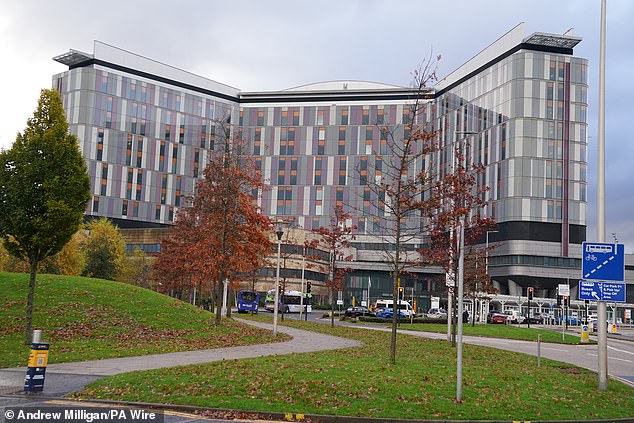
The QEUH in Glasgow has been plagued by problems since it opened in 2015
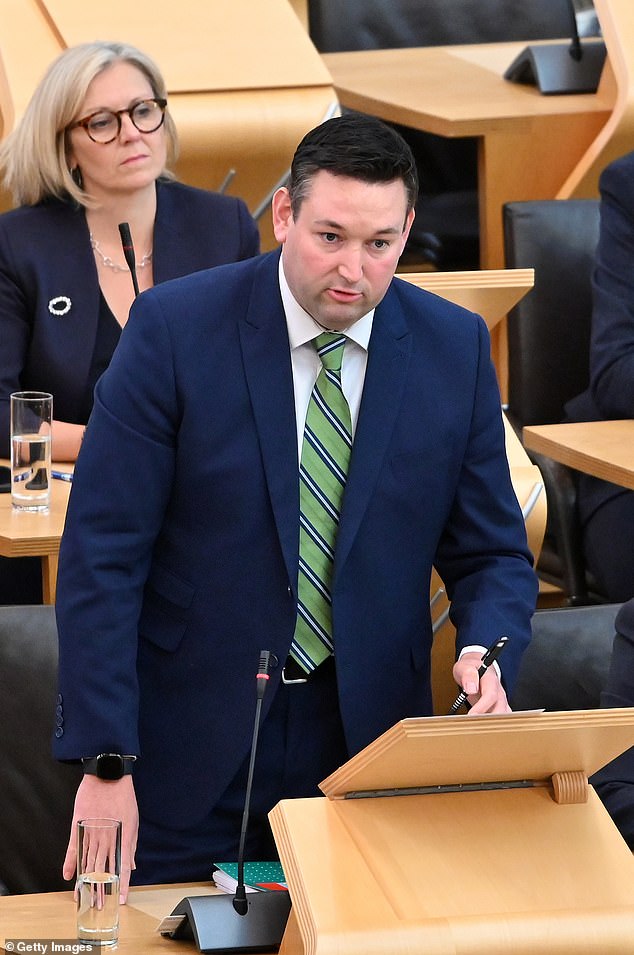
Scottish Tory MSP Miles Briggs said people need to know what the extra £120million is for
Miles Briggs, the Scottish Tory health spokesman, said: 'Taxpayers will be furious that, yet another eye-watering bill is emerging for the QEUH, on top of the hundreds of millions already spent dealing with this SNP-made scandal.
'If ministers expect the public to stump up another £120 million, they must come clean about exactly what has gone so badly wrong and where every penny will be spent.'
The late Queen Elizabeth opened the QEUH in 2015 with the project being heralded by the SNP as a major government achievement.
But dozens of patients, mainly children with cancer, became ill and some died after contracting rare infections which their loved ones suspected was linked to contaminated water or inadequate ventilation systems.
NHSGGC has been named a suspect in a corporate homicide investigation into the deaths of four patients, including schoolgirl Milly Main and grandmother Gail Armstrong, while the overall infection issues and potential links to the hospital building are being probed by a public inquiry, which itself has cost at least £32million.
The new expected costs are detailed in internal briefings obtained by this newspaper under Freedom of Information laws, and state the 'rectification works' to the superhospital are 'circa £120,000,000', including the need for a new bone marrow transplant unit after the existing one was plagued with leaks and mould.
A report by the NHS's Scotland West subnational group produced in March stated that there needed to be awareness of 'emerging capital priorities' when considering spending on any other NHS projects, 'for example the need to progress the rectification works within the QEUH and Royal Hospital for Children Rectification Works (circa £120,000,000), noting the requirement for a new adult bone marrow transplant unit'.
We previously told how bosses were planning to replace substandard floors in all of the bathrooms inpatient rooms. It also emerged that 500 sub-standard fire doors had to be replaced at a cost of £15.5million, along with cladding in the QEUH atrium.
Mr Briggs added: 'The SNP's mishandling of Scotland's flagship hospital has already cost patients, staff and taxpayers dearly.
'After years of secrecy and cover-ups, they owe the public full transparency and accountability.'
Scottish Labour health spokeswoman Dame Jackie Baillie said: 'These are huge sums of money and there needs to be transparency about what it is for.'
A spokesman for NHSGGC was unable to confirm what specifically the extra £120million was needed for but said: 'While a range of potential rectification costs across the wider QEUH estate have been identified and estimated, these figures remain indicative.'
A Scottish Government spokesman said: 'Ministers have been clear they would welcome consideration of any proposals relating to remediation works, including for a new bone marrow transplant unit.'
Source link