
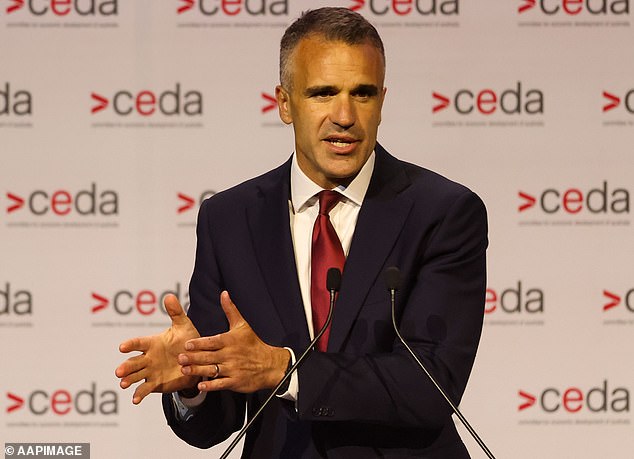
Why do we need high rates of immigration, according to the South Australian Premier, Peter Malinauskas?
Because who else is going to 'feed you and bathe you and wipe your bum when you're 90'.
He's only making his point that way because, again according to the Premier: 'It ain't going to be your kids.
'If I get my way they're going to be working on submarines with high paying jobs so they can afford their own home.'
Malinauskas may have thought he was being candid with his audience when he made these comments late last week.
What he was really doing was revealing how easily the immigration debate can slip from economics into something uglier: a hierarchy of who is here to do what for whom.
His line, a retort to One Nation on the campaign trail in South Australia, was meant to shame sceptics into conceding that migration is necessary. The elderly and infirm do need their bums wiped.
But it also happens to be a perfect example of saying the quiet part out loud, and in a policy sense I'm here to tell you it's wrong anyway.
South Australian Premier Peter Malinauskas sparked blowback from the left and the right after suggesting the reason for Australia's immigration rate is to 'feed you and bathe you and wipe your bum when you're 90'
Malinauskas has reduced a cohort of future citizens, workers, neighbours, parents and taxpayers to a function. Not contributors to society, not participants.
Not people building a life here, but bodies imported to perform intimate labour for the rest of us.
That is the prejudice at the heart of what he said. But it's not what immigration is supposed to represent.
If that's all you're after use work visas and tell your union mates to get out of the way. It shouldn't be the policy purpose of immigration.
The Premier's assumption is that the social contract is essentially transactional and one-directional: Australia gets care labour, migrants get entry, and everyone should be grateful and stay quiet.
The racial subtext doesn't need to be stated for the listener to hear it. Contemporary migration is visibly diverse.
A remark like that inevitably invites a picture of people from different ethnic backgrounds doing the lowest status, most intimate tasks for an older, largely Australian born population that imagines itself entitled to better jobs.
Malinauskas might insist he's praising migrants' contributions, but the picture he painted is one of servility.

For the right wing, Malinauskas's position plays out as disdain: an elite figure sneering at even the thought of reducing immigration rates
It's also deeply unfair to the aged care workforce, by the way, which Malinauskas casually converted into a crude gag.
Aged care is not just wiping bums with a wage attached it. It's often complex, and the workforce performs under pressure.
The tasks include administering medication, managing infections, providing dementia support, helping with mobility and falls, de-escalating bad behaviour and offering palliative care.
And then there is the emotional labour of dealing daily with frailty, confusion and grief. Even when the tasks are basic, the judgement and resilience required to perform them are not.
I haven't just studied aged care as part of the public policy debate - also lecturing on it at university. As a child I watched my mother run an aged care facility in Sydney as the matron, for over 10 years. We lived on site.
The Premier's comments are so diminishing of the workforce and what they do.
If governments are serious about lifting the status of care work and attracting more people into it, a Premier caricaturing the job as toileting does the opposite.
It reinforces the very cultural contempt that keeps wages down and turnover high. Issues he, by the way, can play a role in fixing if he could be bothered.
Instead, his comments fall into that rare category that manages to alienate multiple audiences at once for different reasons, which is usually a sign of sloppy thinking dressed up as bravery.
For the right wing, it plays out as disdain: an elite figure sneering at even the thought of reducing immigration rates.
It feeds the anger potential One Nation voters feel about being lectured down to by people who claim to know better.
On the left, the remarks offend in a different way. They sound like the technocratic version of exploitation: if the job is hard, undervalued and poorly remunerated, import people to do it and call the arrangement pragmatic.
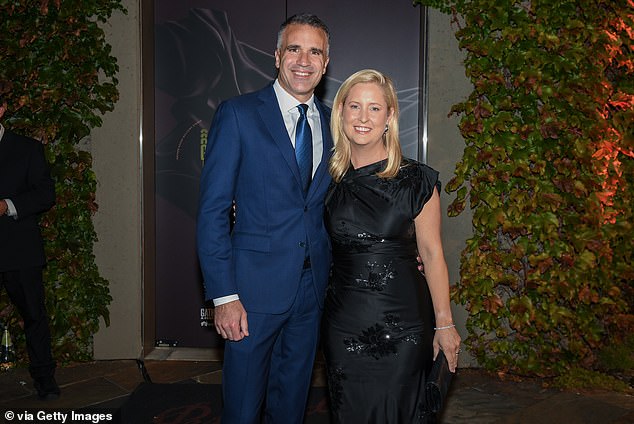
Malinauskas (pictured with wife Annabel) said he wants Australians to be 'working on submarines with high paying jobs so they can afford their own home', rather than aged care
And it is offensive to migrants on a more basic level too. Even if many migrants proudly work in aged care, as they do, being publicly cast as the nation's future personal attendants is humiliating.
It narrows their identity to a service role and smuggles in the idea that their highest social purpose is to clean up after 'real' Australians.
That is not integration, it's stratification.
Worse, Malinauskas' framing, if you look past the offensiveness of his wording, isn't even right in a policy sense, or at least it doesn't have to be.
If the point is simply that some sectors need overseas workers because locals won't do it, it doesn't logically follow that the only answer is permanent immigration on the scale implied.
Australia already runs targeted visa settings and labour mobility arrangements to meet workforce gaps in various sectors, without pretending every shortage is solved by a bigger permanent migration intake.
If the Premier's true objective is staffing, the debate is about smarter labour policy, training, productivity, wages and conditions, not browbeating voters with a crude image of their future dependency.
Why is aged care so reliant on migrant labour in the first place?
The honest answer is not because Australians don't care about the elderly. It's because the job is hard, underpaid, often casualised and routinely treated as low status.
Fix those fundamentals and more locals will get involved. Migration may still play a role, but it stops being the moral cudgel Malinauskas tried to make it.
At any rate, the Premier picked the wrong fight. The One Nation argument about immigration is rarely just a spreadsheet set of questions about workforce numbers.
It is about housing pressure, infrastructure lag, the pace of demographic change, service strain and cultural cohesion. Sometimes expressed reasonably, sometimes crudely.
Malinauskas chose to answer that sprawling set of anxieties with a single, sneering vignette. Shame on him.